
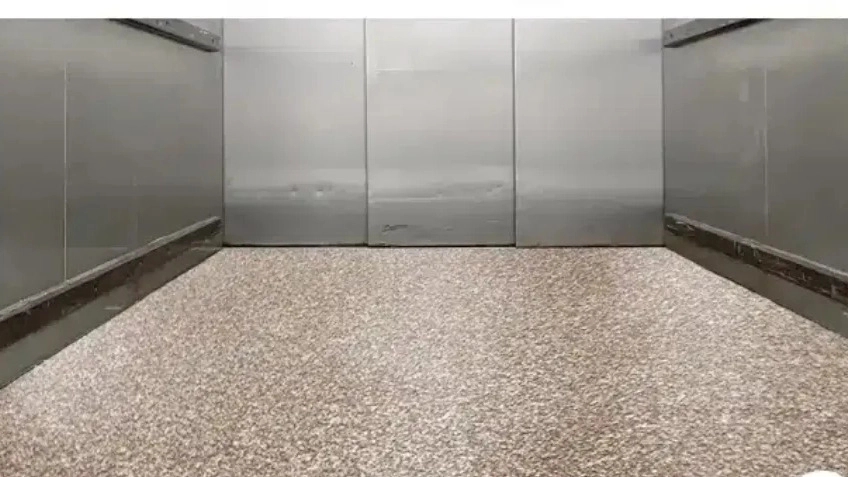
✔️ Elevator Cabin Specifications
Yoke or elevator frame is a supporting frame that keeps the elevator car inside the rails. A yoke is used to install the elevator in the well. The yoke consists of horizontal beams at the top and bottom of the cabin and vertical beams on both sides, which are made of resistant metal. To install the elevator cabin to the yoke, anti-vibration bumpers are used. Some other cabin accessories such as the cabin guide shoes and also the parachute (emergency brake) are connected to the yoke.
✔️ Elevator Cab's Floor Profile
Another important aspect of the elevator cabin specifications is the cabin floor, which may be less considered when choosing a cabin. But the floor of the elevator cabin is one of the most important parts and must have good quality and resistance. Because all the weight of the passengers and the cargo in the cabin enters its floor. The thickness of the elevator floor must be at least 2 cm and different materials can be used, including stone, plastic, parquet, etc.
✔️ Elevator Cab's Body Profile
The dimensions of the elevator cabin should be calculated in such a way that it is proportional to the dimensions of the elevator well and that the cabin does not collide with the well during movement and there is room for the cabin accessories to be placed in the well. The material of the elevator cabin body is made of steel or galvanized sheet. They choose to have sufficient resistance and to be insulated against fire.
To make the body of the cabin, they use slats with a width of 30 to 40 cm and a height equal to the height of the elevator cabin and a thickness of 1.5 mm. To install the slats together, their edges are turned back a few centimeters and they are bolted together.
✔️ Elevator Cabin Interior Profile
Another characteristic of the elevator cabin that should be taken into consideration after the construction of the main body of the elevator cabin is its inner wall. The inner wall is mostly decorative and beautiful, and different metals can be used according to the customer's taste. However, the materials used must be suitable in terms of resistance. And one of the methods of classifying types of elevator cabins is based on the same type of cabin wall. Steel, MDF, glass, galvanized and formica are usually used for the inner wall of the elevator cabin.
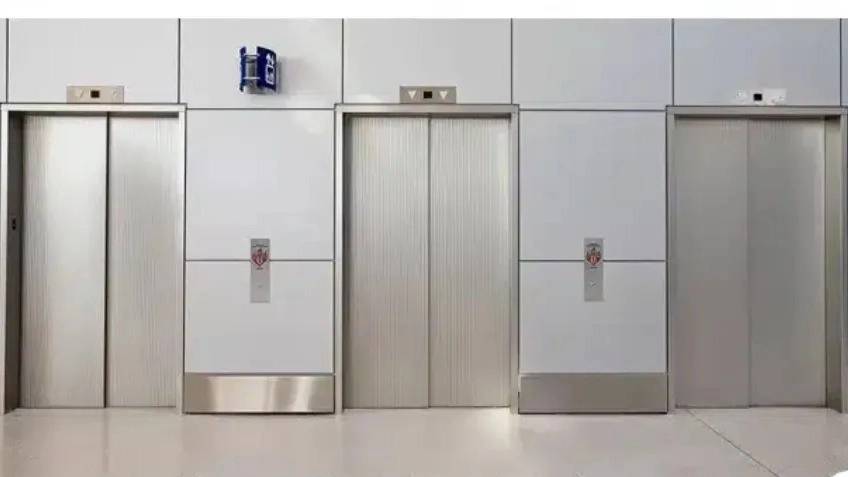
✔️ Elevator Cabin Specifications
The door of the elevator cabin is one of the components that also plays a role in providing security. And attention should be paid to its beauty aspect. To make the door of the elevator cabin, materials must be used that have enough resistance to impact and pressure. The door of the elevator cabin can work automatically or semi-automatically, and its opening method can be telescopic or centralized. These doors can be two-slat, three-slat, bus, sinusoidal, etc.
✔️ Elevator Cabine Ceiling Profile
Galvanized sheets are used to make the roof of the cabin as well as the bodies, which have a thickness of 2 mm. But the overall thickness of the elevator cabin roof should be 2 cm. They use a false ceiling for the elevator cabin, and the lighting of the cabin is through the lamps that are placed in this false ceiling.
✔️ Elevator Chassis Profile
Elevator chassis, which is the elevator control panel on which the buttons of the elevator floors are located, is one of the important components examined in the specifications of the elevator cabin. On the elevator chassis, in addition to the floor button, alarm, ventilation, door opening and closing, and emergency stop buttons are also installed.
The elevator chassis should be installed at a height that is easy for different people to access. So that the lowest button is at a height of 89 cm from the floor of the elevator and the highest button is at a height of 137 cm from the floor of the elevator.
✔️ Lighting Elevator Lighting Profile
One of the characteristics of the elevator cabin in terms of lighting is that when the cabin is stationary, the lights are off and when the elevator door is opened and during Use, the lights stay on. You can use direct or indirect lighting to provide lighting for the elevator cabin. And the thing that should be paid attention to is that hanging lamps should not be used in any way and the lights should be firmly fixed in the ceiling.
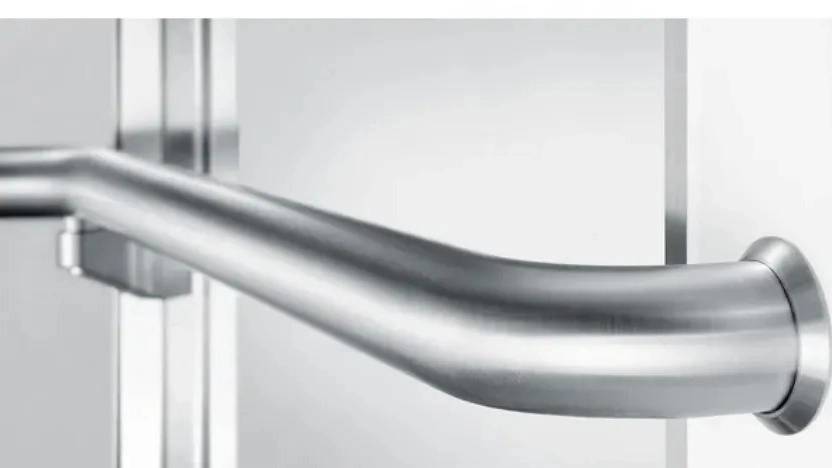
✔️ Elevator Cab's Handle Specifications
The presence of a handle in the elevator cabin provides support for passengers to maintain balance. And it provides more comfortable travel for people with disabilities or physical disabilities. The handle of the elevator cabin should be installed at a height of 90 cm from the floor of the elevator and two centimeters away from the cabin wall. The material of this handle is generally selected from steel, which has good resistance and is easy to clean and disinfect.